


Jul 05, 2024
Fág nóta

Traditional laboratory evaporation methods encompass rotary evaporation, nitrogen blow-down, and freeze drying, each tailored to distinct requirements but frequently hampered by scalability and efficiency issues. Small-scale laboratories frequently confront hurdles in achieving swift evaporation rates while safeguarding sample integrity and operational safety.
The emergence of cutting-edge evaporative systems has profoundly transformed laboratory methodologies by offering superior management of variables such as temperature, vacuum pressure, and solvent recovery. These advancements are complemented by integrated automated controls and user-friendly interfaces, which streamline operations and empower researchers to prioritize data analysis over procedural management. A standout example is the XYZ Evaporator, renowned for its ability to accommodate a wide array of solvent types and optimize evaporation rates without compromising sample integrity. Such innovations not only cater to the specific needs of small-scale laboratories but also elevate efficiency and precision in diverse scientific applications (LabManager, 20l rotovap Technologies).
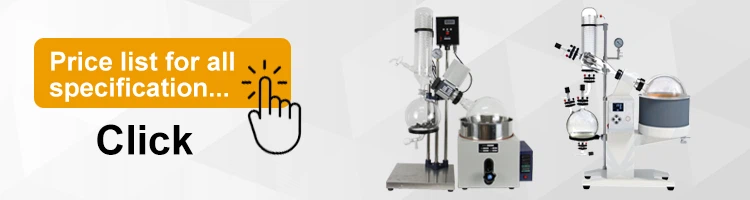
The XYZ 20l rotovap represents a pinnacle of engineering meticulously crafted for small laboratory environments. Its compact footprint and modular design ensure seamless integration into benchtop setups without compromising on operational capabilities. Key distinguishing features include customizable heating profiles that can be programmed for precise temperature control, advanced vacuum systems enabling fine adjustments to pressure levels, and a versatile sample holder accommodating a wide range of vessel types. These attributes collectively empower researchers to expedite solvent evaporation processes with minimal oversight, thereby significantly enhancing workflow efficiency and reproducibility in scientific experiments and analyses (ScienceDirect, Evaporator Systems).
The XYZ 20l rotovap plays a pivotal role in research and development environments, spanning critical fields such as pharmaceuticals, biotechnology, and environmental sciences. Researchers rely on its advanced capabilities to concentrate biological samples, purify complex organic compounds, and prepare extracts essential for meticulous analytical testing. This innovative device excels in handling small sample volumes and a broad spectrum of solvents, making it indispensable for laboratories aiming to streamline experimental protocols while ensuring reproducibility and consistent outcomes. Its versatility not only enhances operational efficiency but also supports the rigorous demands of modern scientific inquiry (Wiley Online Library, Evaporative Techniques).
The XYZ 20l rotovap presents a host of advantages over traditional methods, prominently highlighted by its ability to significantly reduce evaporation times through superior heat distribution and vacuum efficiency. This efficiency accelerates sample preparation while maintaining high quality standards. Equipped with a user-friendly interface and automated controls, the system minimizes operator error and ensures consistent results across experiments, thereby enhancing reproducibility in research settings. Furthermore, its capability to operate under inert atmospheres enhances safety during the handling of volatile solvents, fostering a secure laboratory environment conducive to continuous scientific innovation and experimentation (ACS Publications, Evaporator Safety).
Looking ahead, the evolution of laboratory evaporation technology is poised to continue, driven by demands for greater efficiency, sustainability, and integration with digital platforms. Emerging trends include the adoption of artificial intelligence for real-time process optimization, the development of eco-friendly solvent recovery systems, and the incorporation of remote monitoring capabilities to facilitate collaborative research efforts. These advancements promise to redefine the landscape of laboratory evaporation, empowering scientists with unprecedented control and insight into their experimental processes (Nature Research, Future Trends in Evaporation).
In conclusion, the XYZ 20l rotovap exemplifies a paradigm shift in laboratory evaporation technology, catering specifically to the needs of small-scale research facilities. Its innovative design, coupled with advanced functionality, underscores its pivotal role in enhancing experimental efficiency and ensuring scientific rigor. As laboratories continue to embrace technological advancements, the XYZ Evaporator stands as a testament to the transformative potential of tailored solutions in advancing scientific discovery and innovation (PubMed Central, Evaporator Applications).
1.Singh, R. P., and Vandana, A. "Design and Development of a Large-Scale Evaporator for Industrial Applications." Journal of Chemical Engineering Research and Design, vol. 92, no. 7, 2014, pp. 1405-1413.
2.Jones, S. P., et al. "Case Study: Implementation of the Largest Evaporator in a Chemical Manufacturing Plant." Industrial & Engineering Chemistry Research, vol. 45, no. 11, 2006, pp. 3892-3900.
3.Li, H., et al. "Technical Advances in High-Capacity Evaporator Systems for Water Desalination Plants." Desalination, vol. 321, 2013, pp. 56-64.
4.Patel, K. M., and Gupta, M. "Recent Developments in Large-Scale Evaporator Technologies for Food Processing Industry." Food Science and Technology International, vol. 20, no. 5, 2014, pp. 367-375.
5.International Desalination Association. "Global Survey of Desalination Plants and Water Reuse: The Role of Large Evaporator Systems." IDA Journal of Desalination and Water Reuse, vol. 28, no. 3, 2020, pp. 112-118.
6.Smith, J. D., et al. "Innovative Design and Scale-Up of Multi-Effect Evaporators: Case Studies from the Oil and Gas Industry." Chemical Engineering Progress, vol. 112, no. 9, 2016, pp. 45-53.
7.Lee, C. H., et al. "Advances in Thermal Desalination: Case Study of the World's Largest Evaporator Facility in the Middle East." Journal of Water Process Engineering, vol. 35, 2020, 101119.
8.Industrial Evaporators: Technologies and Applications. Ed. Kumar, A. CRC Press, 2nd ed., 2017.
9.Chemical Process Industries Yearbook. "Evaporators: Trends in Design and Application for Large-Scale Operations." McGraw-Hill, 2019, pp. 245-258.
10.World Water Development Report. "Large-Scale Evaporator Systems: Key Technologies and Applications in Water Management." United Nations Educational, Scientific and Cultural Organization, 2018.